
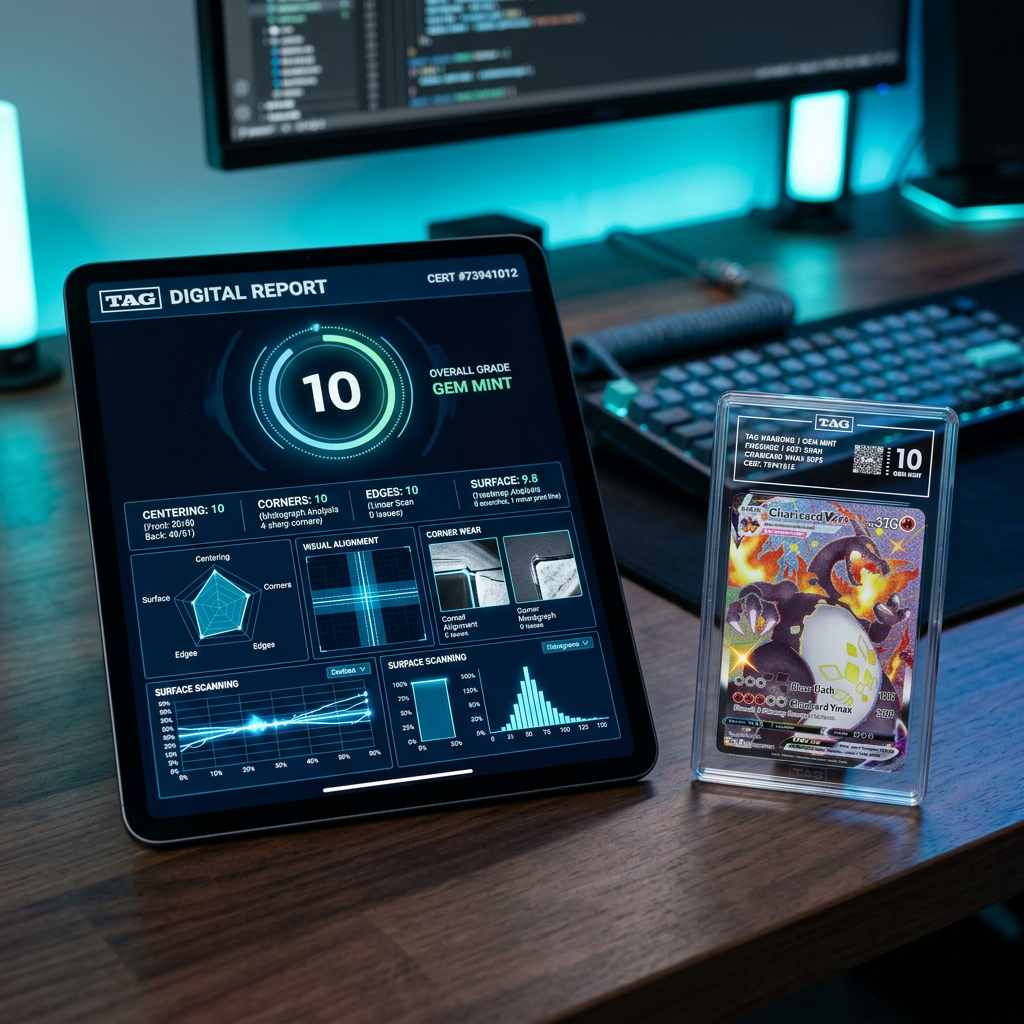
Updated May 2026. TAG (Technical Authentication & Grading) has become one of the most talked-about names in modern card grading — not because it is the oldest (it isn't), but because it is fundamentally changing how transparency works in the hobby. PSA has dominated the resale market for 30 years. BGS (Beckett) offers subgrades. SGC and CGC follow traditional models.
TAG's difference: every single card gets a detailed digital report — the DIG report — that breaks down centering measurements, corner/edge/surface condition, and explains exactly why a card received its grade. This isn't optional flavor text. It is core to TAG's grading philosophy: data and transparency, not just a number.
What is a TAG DIG report?
DIG stands for Digital Image and Grading report.
It is part of TAG's broader push toward a more data-led, transparent grading experience. Instead of only giving collectors a final grade, the idea is to provide more visibility into how that result was reached.
Why collectors like the DIG report
A lot of collectors do not just want to know what grade a card got.
They want to know:
- Why it got that grade
- What held it back
- How strong or weak it was in different areas
- What makes one 10 different from another card that did not get there
That is the appeal of a detailed digital report.
Why TAG stands out
TAG has positioned itself differently from traditional grading companies.
Its appeal is often tied to:
- Tech-led grading
- Data transparency
- Digital reports
- Modern slab presentation
- Accountability behind the final result
For collectors who want more explanation behind a grade, this is a strong part of the brand appeal.
For a broader comparison of how TAG fits alongside other companies, see our guide on PSA vs ACE vs Beckett vs CGC vs TAG.
Why this matters for the hobby
The grading space has gradually moved toward greater transparency.
Collectors increasingly want to understand the logic behind a grade, especially when cards can vary so much in resale value based on small condition differences.
A report-based approach speaks directly to that demand.
What this means for pre-grading
Even with a detailed report after grading, the same question still exists before submission:
Should this card be graded in the first place?
That is why pre-grading still matters.
If you can identify a weak candidate early, you may avoid submission fees altogether. If you can identify a strong candidate, you go into the process with more confidence.
Where CardCenter fits in
CardCenter focuses on the stage before grading.
It helps collectors assess centering, which is one of the clearest mathematically measurable parts of card condition. That makes it a useful first step before deciding whether a card is worth submitting to TAG or any other grading company.
If you want to understand exactly what centering numbers you need, our guide on what centering do you need for a PSA 10 breaks down the thresholds. Using a card grading app before submission gives you a stronger starting point.
Frequently asked questions
DIG stands for **Digital Image and Grading** report. It is TAG's detailed digital condition analysis, accessible via QR code or certification lookup on the slab. The report breaks down the grade across multiple areas with much more transparency than a single overall number.
Yes. TAG (Technical Authentication & Grading) is a recognised grading company that uses patented computer vision technology and publishes detailed digital reports for every graded card. It is newer than PSA or Beckett but has become a serious option for collectors who value transparency.
PSA still leads on pure resale premium for most Pokémon and sports cards. TAG's value proposition is different — it competes on transparency, data, and modern slab design rather than pure secondary-market price. Resale gap varies by card and category.
Yes. Every TAG-graded card has a unique certification number and accessible DIG report. Buyers can look up the cert number on TAG's website to see the full grading breakdown before purchasing, which adds confidence to secondary-market transactions.
TAG X uses the industry-standard 10-point grading scale that collectors already recognise from PSA, BGS, and other major companies. TAG also offers its own score-based system on certain services for collectors who want even more granular condition data.
Is TAG the future of card grading?
TAG represents a generational shift in how collectors want to interact with grading. The digital-first, data-transparent approach appeals to younger collectors, tech-forward buyers, and anyone who has ever been frustrated by submitting a card to PSA and getting a grade with zero explanation of what held it back.
BGS subgrades help. ACE transparency helps. But TAG's DIG report goes further — it is the closest thing the hobby has to real accountability and explanation in grading.
That said, resale value matters. As of 2026, PSA 10 still commands higher secondary-market premiums than TAG 10, especially on Pokémon holos and sports rookie cards. That may shift over time — TAG's market share is growing fast. But for pure financial ROI on graded cards, PSA still leads.
The question collectors face: do you grade for resale premium (PSA), or for transparency and collector experience (TAG)? Or do you split and submit your absolute best cards to PSA for value, and your collection keepers to TAG for understanding and peace of mind?
Final thoughts: TAG's DIG report is changing the game
TAG's DIG report matters because it reflects something collectors increasingly want: more transparency, more explanation, and more confidence in the grading process.
When you submit a card to PSA and it comes back as a PSA 9 instead of a hoped-for 10, you don't know why. It was centering? Corners? A surface flaw you missed? PSA does not say. You get a grade, you accept it, and you move on.
TAG tells you exactly why. Centering measurements. Corner findings. Edge notes. Surface analysis. That is powerful — it turns a number into a lesson, a grade into understanding.
That is a strong trend in the hobby, and it aligns well with why pre-grading tools matter too. Before you get a detailed report after grading, you still need to decide whether the card deserves to be submitted at all. That is exactly where CardCenter fits. Use a card centering tool before submission, understand your card's true centering, and make smarter decisions about which grader is right for your card.